Skip to content
Compare Joomla vs WordPress in 2026. Learn the differences in features, SEO, security, ease of use, pricing, and performance to choose the best CMS.
Joomla vs WordPress: Complete Comparison for 2026
If you’re planning to build a website, one of the biggest decisions you’ll make is choosing the right content management system (CMS). The debate around Joomla vs WordPress has been ongoing for years because both platforms are powerful, open-source, and widely used.
While they share many similarities, they target different types of users. WordPress is known for its simplicity and massive plugin ecosystem, whereas Joomla offers more built-in flexibility and advanced user management.
In this detailed Joomla vs WordPress comparison, we’ll compare their features, ease of use, SEO, security, customization, pricing, performance, and more to help you make the right decision.
What Is WordPress?
WordPress is the world’s most popular CMS, powering over 40% of all websites. It started as a blogging platform but has evolved into a complete website-building solution.
With thousands of themes and plugins available, WordPress can be used to create:
- Business websites
- Blogs
- Portfolio websites
- WooCommerce online stores
- Membership websites
- LMS websites
- Forums
- Booking systems
- News portals
Its beginner-friendly dashboard makes website management easy even for non-technical users.
What Is Joomla?
Joomla is another free and open-source CMS that has been around since 2005.
It offers more advanced functionality out of the box than WordPress, including better user permission management and multilingual support without requiring additional extensions.
Joomla is often chosen for:
- Government websites
- Educational institutions
- Community portals
- Membership websites
- Large corporate websites
- Complex content management systems
However, Joomla has a steeper learning curve.
Joomla vs WordPress: Quick Comparison
| Feature | WordPress | Joomla |
|---|---|---|
| Ease of Use | ⭐⭐⭐⭐⭐ | ⭐⭐⭐ |
| Learning Curve | Easy | Moderate |
| SEO | Excellent | Very Good |
| Themes | 13,000+ | Thousands |
| Plugins/Extensions | 60,000+ | 6,000+ |
| eCommerce | WooCommerce | VirtueMart |
| Community | Massive | Large |
| Beginner Friendly | Yes | No |
| Customization | Excellent | Excellent |
| Market Share | Highest | Much Smaller |
Ease of Use
One of the biggest differences in Joomla vs WordPress is usability.
WordPress
WordPress was designed with beginners in mind.
After installation, you’ll find:
- Simple dashboard
- Visual page builders
- Drag-and-drop editors
- One-click plugin installation
- Easy media management
Even someone with no coding knowledge can build a professional website.
Pros
- Beginner-friendly interface
- Easy content publishing
- Large number of tutorials
- Simple navigation
Joomla
Joomla offers more flexibility but requires more technical knowledge.
New users often need time to understand:
- Modules
- Components
- Categories
- Menus
- Template positions
The dashboard is more complex compared to WordPress.
Winner: WordPress
Installation
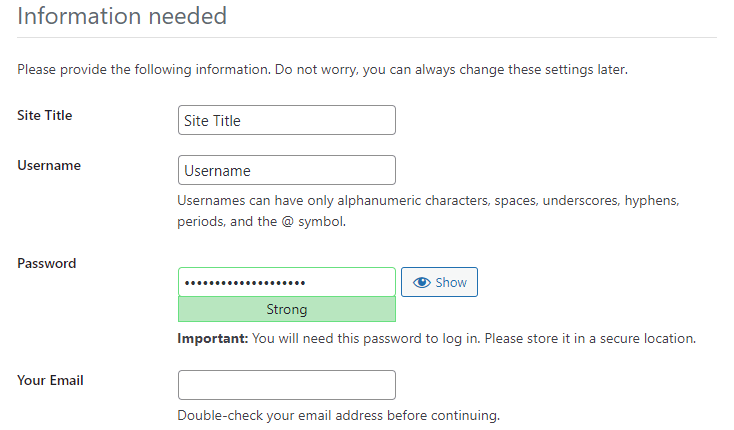
Both platforms offer one-click installation through most web hosting providers.
WordPress installation typically takes only a few minutes.
Joomla installation is also simple, but its initial configuration usually requires additional setup.
Themes and Design
Website appearance matters, and both CMS platforms offer customizable themes.
WordPress Themes
WordPress has the largest collection of themes.
You can find:
- Free themes
- Premium themes
- Business themes
- WooCommerce themes
- Portfolio templates
- Magazine layouts
Popular page builders include:
- Elementor
- Divi
- Beaver Builder
- Bricks Builder
These tools allow complete visual editing without coding.
Joomla Templates
Joomla also provides professional templates.
However:
- Smaller marketplace
- Fewer free options
- Less variety
- Limited drag-and-drop builders
Although high-quality templates exist, the overall ecosystem is much smaller.
Winner: WordPress
Plugins and Extensions
Plugins extend your website’s functionality.
WordPress
WordPress offers over 60,000 free plugins.
Popular categories include:
- SEO optimization
- Backup solutions
- Security
- Cache plugins
- Contact forms
- Membership systems
- LMS platforms
- WooCommerce
- Performance optimization
You can build almost any type of website without writing code.
Joomla
Joomla extensions are called Extensions.
Available categories include:
- SEO
- Security
- Galleries
- Membership
- eCommerce
- Forms
Although quality extensions exist, the selection is much smaller than WordPress.
Winner: WordPress
SEO Comparison
SEO is one of the most important factors when choosing a CMS.
WordPress SEO
WordPress is widely recognized for its SEO capabilities.
You can easily optimize:
- Meta titles
- Meta descriptions
- XML sitemaps
- Robots.txt
- Canonical URLs
- Schema markup
- Breadcrumbs
- Internal linking
- Image optimization
- Redirect management
Plugins like Yoast SEO, Rank Math, and All in One SEO make optimization straightforward.
Joomla SEO
Joomla also includes several SEO features:
- Search-friendly URLs
- Metadata management
- URL rewriting
- Menu-based optimization
However, advanced SEO often requires additional extensions.
For beginners, WordPress is much easier to optimize for Google rankings.
Winner: WordPress
Security
Both platforms take security seriously.
WordPress
WordPress security depends on:
- Regular updates
- Trusted plugins
- Strong passwords
- Firewall plugins
- Malware scanning
- Secure hosting
Because WordPress powers millions of websites, it is a frequent target for attacks, making proper maintenance essential.
Joomla
Joomla has an excellent security reputation.
Its smaller market share makes it a less common target, and it includes strong built-in access control features.
Both CMS platforms can be highly secure when maintained correctly.
Winner: Tie
Performance
Website speed depends more on hosting, caching, optimization, images, and themes than on the CMS itself.
WordPress performs exceptionally well when optimized using:
- Object caching
- CDN integration
- Image compression
- Lazy loading
- Optimized themes
Joomla also delivers fast performance when configured properly.
Neither CMS is inherently slow.
Winner: Tie
Multilingual Support
This is one area where Joomla has a clear advantage.
Joomla
Built-in multilingual support allows you to create websites in multiple languages without installing additional extensions.
WordPress
WordPress usually requires plugins such as:
- WPML
- Polylang
- TranslatePress
These plugins work well but add extra complexity.
Winner: Joomla
User Management
If your website requires multiple user roles with advanced permissions, Joomla performs better.
It includes sophisticated access control lists (ACL) directly in the core.
WordPress supports multiple roles but often requires plugins for advanced permission management.
Winner: Joomla
eCommerce
WordPress
WooCommerce is the world’s most popular eCommerce platform.
It supports:
- Physical products
- Digital downloads
- Memberships
- Subscriptions
- Payment gateways
- Shipping
- Coupons
- Inventory management
Joomla
Joomla offers VirtueMart and other shopping extensions.
While capable, they lack the ecosystem and flexibility of WooCommerce.
Winner: WordPress
Community Support
WordPress has the largest CMS community in the world.
You’ll find:
- Millions of tutorials
- YouTube videos
- Documentation
- Forums
- Facebook groups
- Reddit discussions
- Professional developers
Finding Joomla support is still possible but less abundant.
Winner: WordPress
Pricing
Both CMS platforms are free.
Your costs mainly include:
- Domain name
- Web hosting
- Premium themes
- Premium extensions
- Maintenance
WordPress generally offers more free resources, reducing overall expenses.
Pros and Cons
WordPress
Pros
- Extremely beginner-friendly
- Massive plugin ecosystem
- Thousands of themes
- Excellent SEO tools
- WooCommerce support
- Large community
- Easy updates
- Affordable
Cons
- Requires plugins for many advanced features
- Plugin conflicts may occur
- Needs regular maintenance
Joomla
Pros
- Strong built-in features
- Excellent user permission management
- Native multilingual support
- Flexible content structure
- Highly customizable
Cons
- Steeper learning curve
- Smaller extension marketplace
- Fewer templates
- Less community support
Joomla vs WordPress: Which Should You Choose?
Choose WordPress if you want:
- A beginner-friendly CMS
- Fast website development
- Better SEO tools
- WooCommerce store
- Thousands of plugins
- Easy customization
- Lower maintenance costs
Choose Joomla if you need:
- Advanced user permissions
- Built-in multilingual functionality
- Complex content management
- Enterprise-level websites
- More technical flexibility
Frequently Asked Questions
Is Joomla better than WordPress?
It depends on your needs. Joomla offers stronger built-in user management and multilingual features, while WordPress is easier to use, has a much larger ecosystem, and is generally the better choice for most websites.
Which CMS is easier for beginners?
WordPress is significantly easier to learn and manage.
Which platform is better for SEO?
WordPress has the advantage thanks to its extensive SEO plugins and user-friendly optimization tools.
Is Joomla more secure than WordPress?
Both platforms are secure when updated regularly. Security depends more on maintenance, hosting, and best practices than on the CMS itself.
Can Joomla be used for eCommerce?
Yes. Joomla supports online stores through extensions like VirtueMart, but WooCommerce on WordPress provides a larger ecosystem and more features.
Which CMS is faster?
Both can achieve excellent performance with quality hosting, caching, image optimization, and lightweight themes.
Final Verdict
When comparing Joomla vs WordPress, both platforms are capable of building professional websites. Joomla excels in advanced user permissions, multilingual support, and handling complex website structures. However, WordPress stands out for its ease of use, extensive customization options, SEO-friendly features, massive plugin library, and unmatched community support.
For most users—including bloggers, freelancers, small businesses, agencies, and eCommerce store owners—WordPress is the better overall choice. It allows you to build, manage, and grow a website with less effort while giving you access to thousands of tools and integrations. Joomla remains a strong option for developers and organizations that require more advanced built-in functionality, but for the majority of modern websites in 2026, WordPress offers the best balance of flexibility, scalability, and usability.
External Resources
| Resource | Link |
|---|---|
| WordPress Official | https://wordpress.org |
| Joomla Official | https://www.joomla.org |
| WooCommerce | https://woocommerce.com |
| Yoast SEO | https://yoast.com |
| Rank Math SEO | https://rankmath.com |